
APMT Seguridad · Guide
Job-site safety for equipment operators and signal persons
Short answer
What safety rules should operators and signal persons follow on site?
The basic rule: nobody enters a machine's work radius unless the operator knows and has confirmed it. That takes the right PPE, marked danger zones, knowing each machine's blind spots, an agreed signal person using hand signals both know, distance from suspended loads and excavation edges, lockout/tagout before working on equipment, and a short safety talk at the start of the shift.
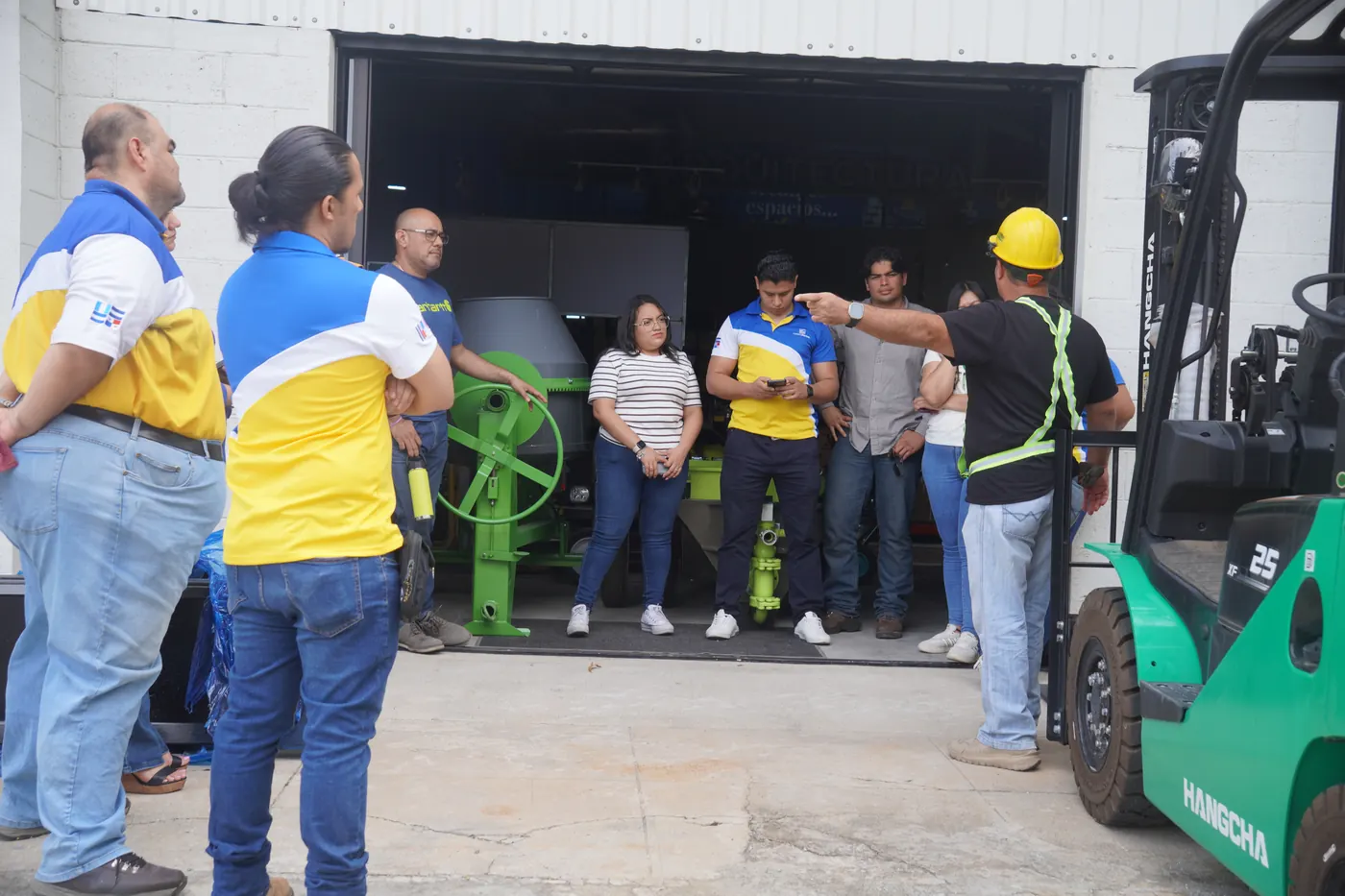
For the operator
- Know your machine's blind spots and swing radius, and assume someone is there until you confirm otherwise.
- Before swinging, reversing or moving a load, confirm with the signal person.
- If you lose sight of the signal person or do not understand a signal, you stop.
- Keep away from excavation and slope edges: edges give way.
- Inspect the machine before starting; do not operate with alarms or brakes that do not work.
For the signal person
- Agree with the operator, before starting, who gives the signals and which ones will be used.
- Stand where the operator can see you, outside the swing radius and the load's path.
- Use standard hand signals, clearly and one at a time.
- Keep other people out of the work zone.
- Never stand under a suspended load.
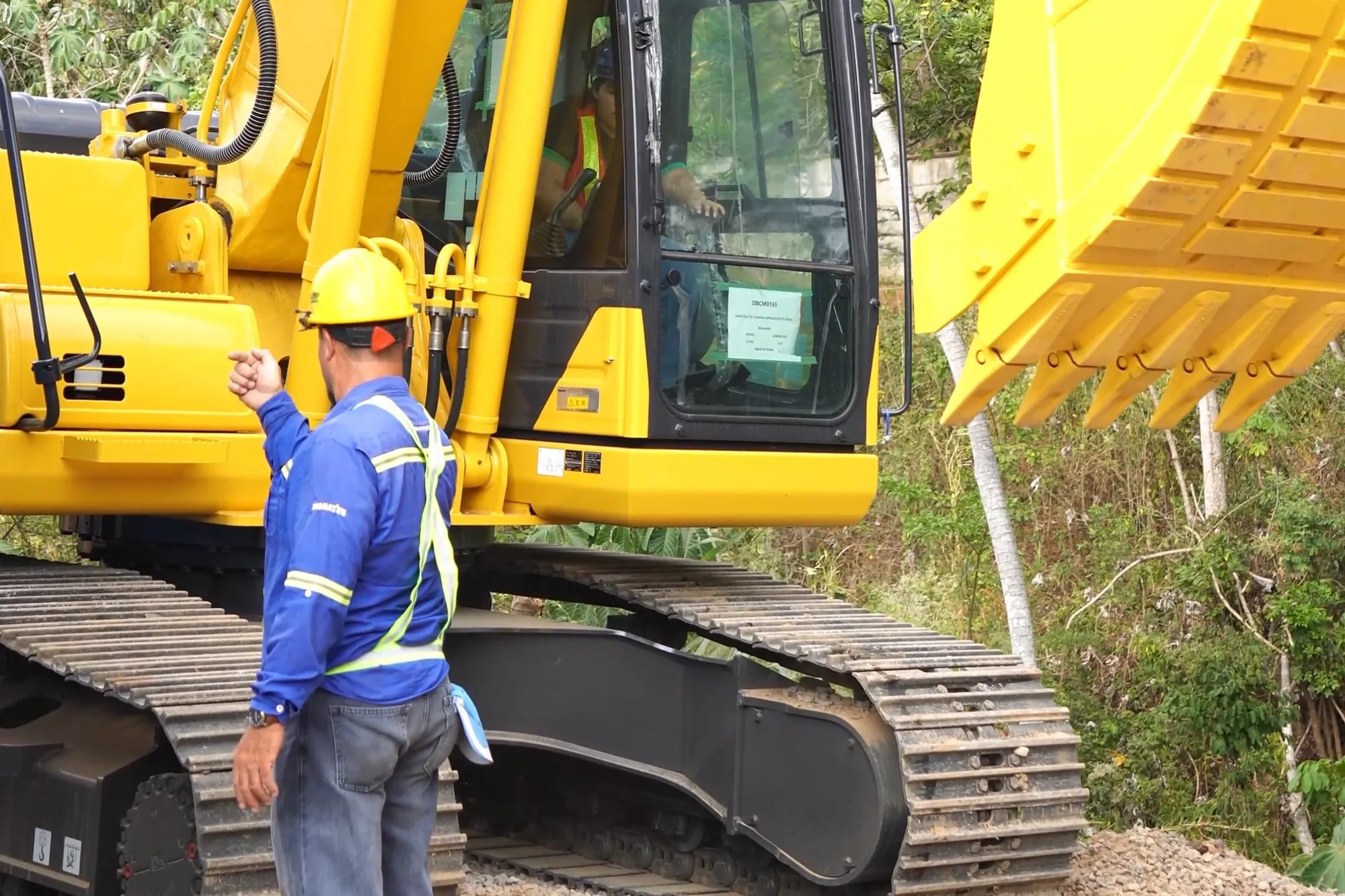
For everyone on site
- The right PPE for your zone and task.
- Respect danger zones and signage around machines.
- In an incident, know who to notify first and how to report.
Before working on a machine: lockout/tagout
Before repairing, adjusting or cleaning equipment, its energy is isolated and a lock and tag are applied, so nobody starts it while someone is working on it. The exact steps are defined by your site procedure and the manufacturer's manual.
The 10-minute safety talk
A short toolbox talk at the start of the shift, on one concrete topic for that day —a new excavation, a machine arriving, a recent incident—, does more than a long talk once a month. APMT's safety program teaches how to structure and lead it.
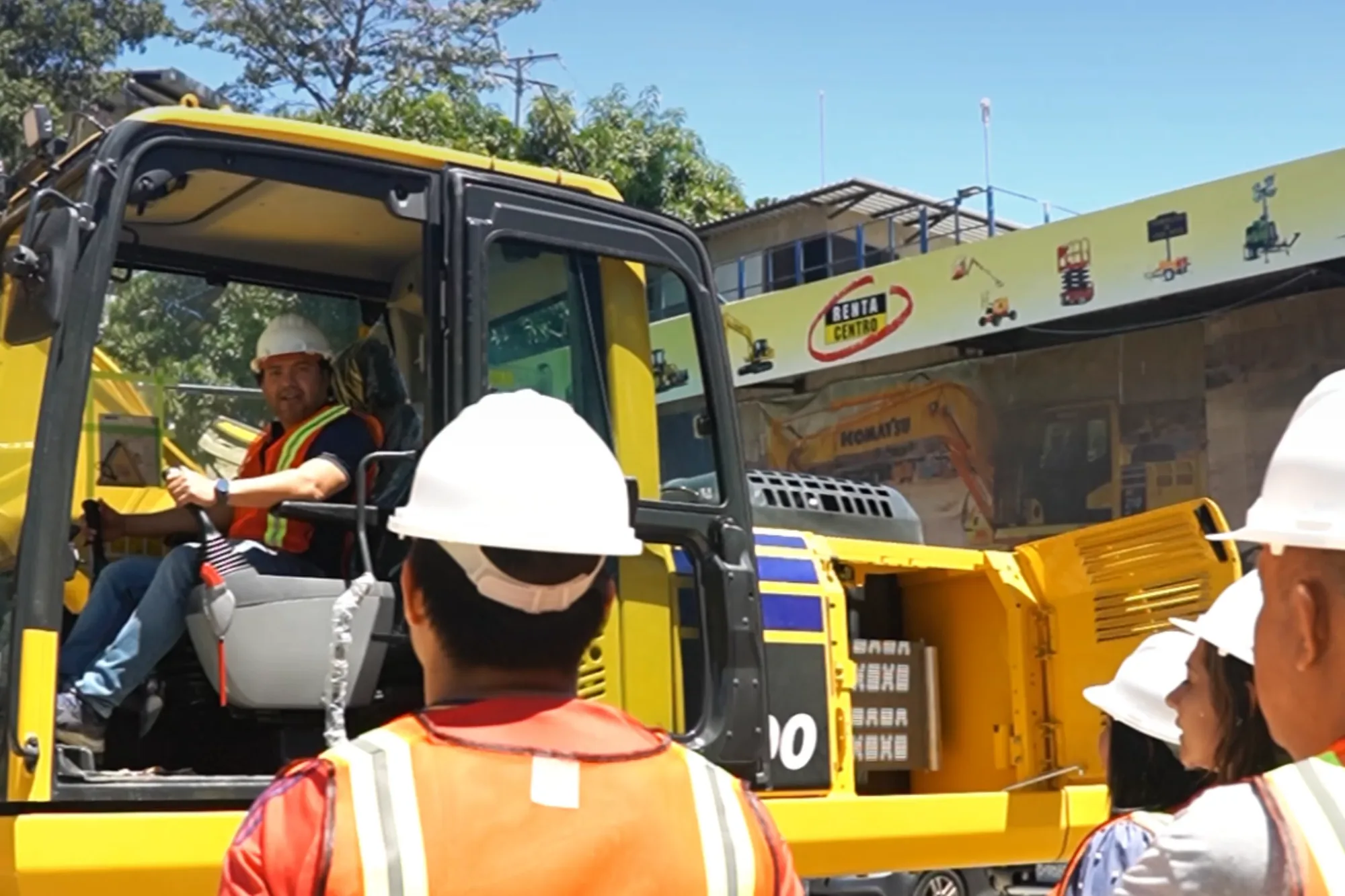
Where it is taught
| Program (in Spanish) | Delivery | Level | Modules | Hours | Certificate |
|---|---|---|---|---|---|
| Inducción general a obraEl Salvador · Nicaragua · Guatemala · Panama | Online | Bronze | 5 | To be defined | Participation |
| Seguridad alrededor de maquinariaEl Salvador · Nicaragua | Blended | Bronze | 6 | To be defined | Pass |
General orientation guide. Your country's regulations, your site procedure and the manufacturer's manual take precedence over this guide.
Frequently asked questions
What does a signal person do on site?
Guides the operator with hand signals where the operator cannot see and keeps people out of the machine's work zone. Operator and signal person agree on the signals before starting.
What do I do if I lose sight of the signal person while operating?
You stop and do not resume until visual contact is restored and the next maneuver is confirmed.
Who should take the job-site safety induction?
Everyone who will set foot on a site with machinery. APMT's General job-site induction is online and available in El Salvador, Nicaragua, Guatemala and Panama.
What is lockout/tagout?
Isolating a machine's energy and marking it with a lock and tag so nobody starts it while someone is repairing, adjusting or cleaning it.
Sources
- APMT program page: Seguridad alrededor de maquinaria
- APMT program page: Inducción general a obra
- Your machine manufacturer's operation and maintenance manual (it overrides this guide)
An APMT guide, written from the published program catalog and the sources cited.
The regulatory or employment validity of a certification may vary by country, program and accrediting body. Komatsu, Smart Construction and KOMTRAX are trademarks of their respective owners.