
APMT Mantenimiento · Guide
Daily pre-operation inspection: a safety checklist
Short answer
What should you check in a machine's daily inspection before operating it?
Before starting, walk all the way around the machine (360°) looking for leaks, fluid levels out of range, damage to tracks or tires and loose parts; then, in the cab, check controls, gauges and alarms. If you find anything that compromises safety, you do not start: you report it with evidence and escalate it. The exact order and points for your machine are set by the manufacturer's manual.
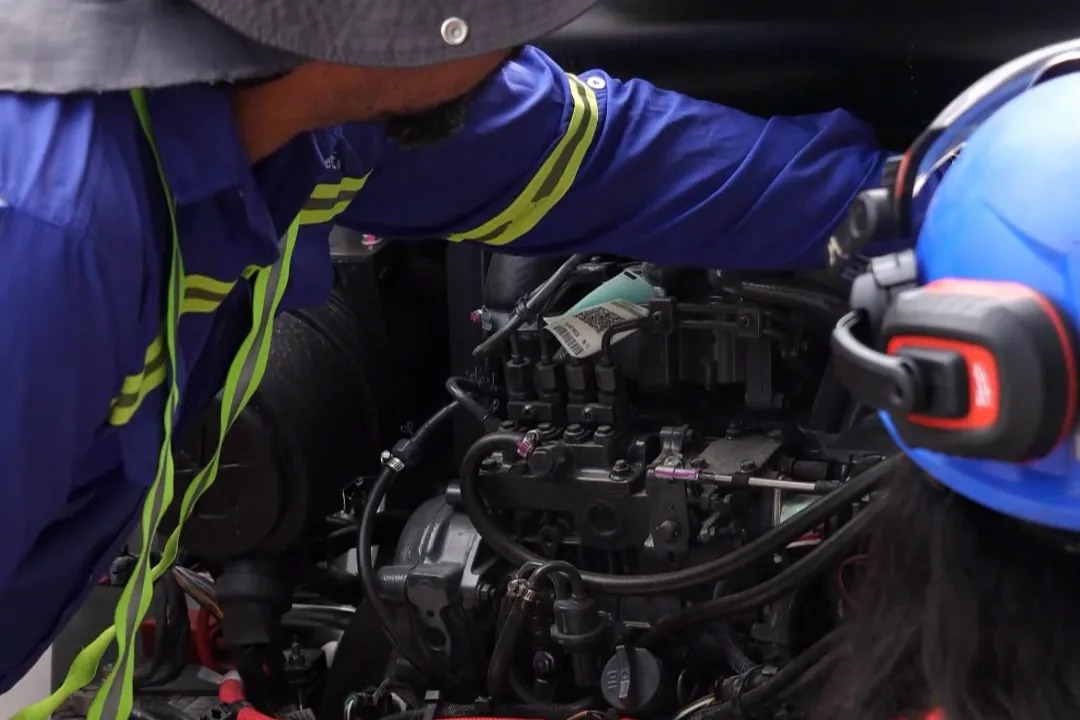
Why it is done every shift
Because a leak, a pin without its lock or an alarm that does not sound is visible on the walk-around and invisible once the machine is working. What you find before starting is a report; the same thing found late can be downtime or an incident.
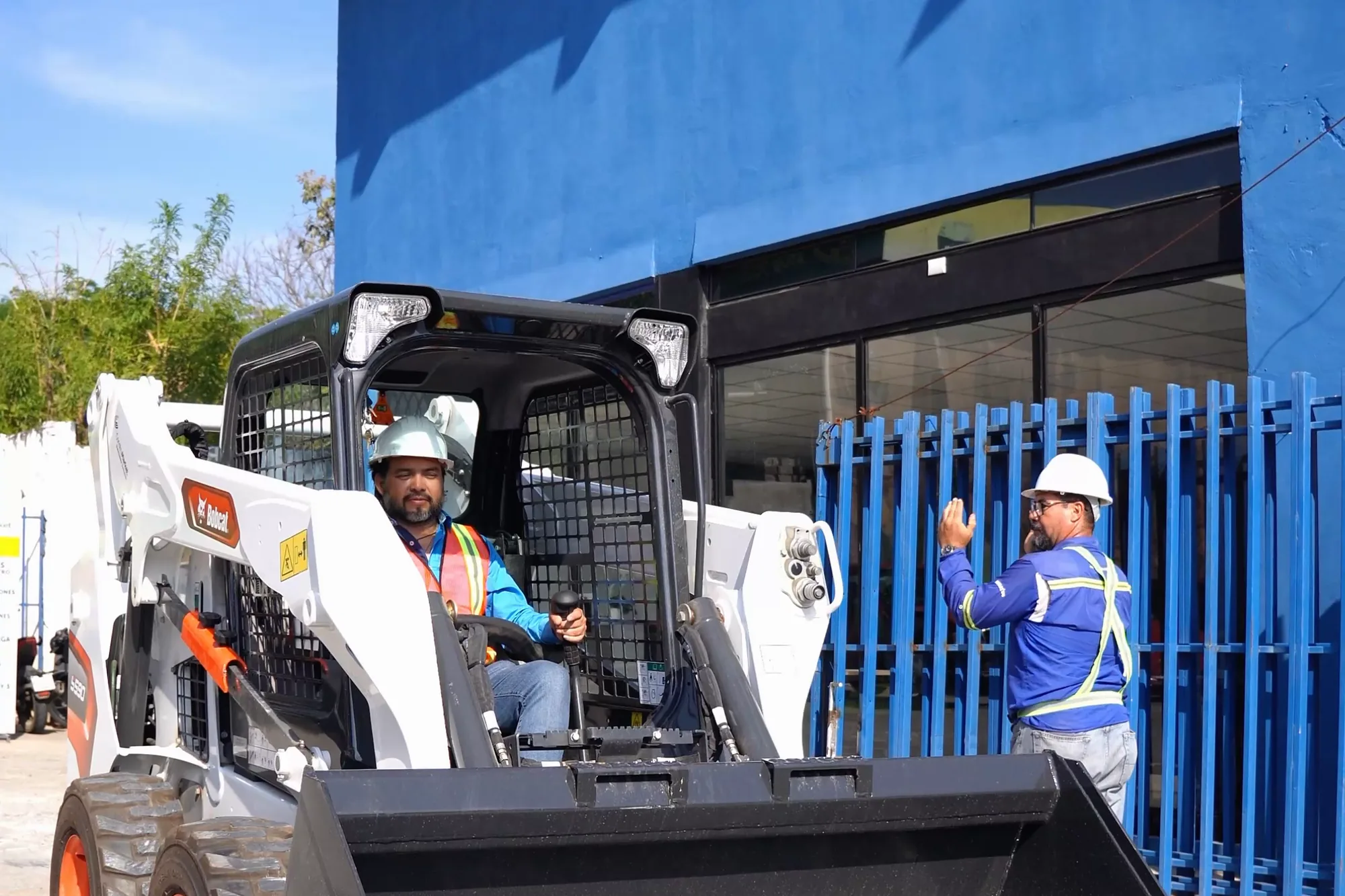
General checklist: the 360° walk-around
- The ground under the machine: oil, coolant or fuel stains.
- Hydraulic hoses and fittings: leaks, rubbing, cracks.
- Engine oil, coolant, hydraulic oil and fuel levels, with the machine positioned as the manual says.
- Undercarriage or tracks: tension, shoes, rollers; or tires: cuts, deformation and pressure.
- Attachment: bucket, teeth, pins and their locks, quick coupler.
- Structure: cracks or open welds; guards and covers in place.
- Lights, mirrors, cameras and windows clean and in good condition.
Checks before working with a Komatsu machine: from the visual inspection to the details that make operation safe and efficient.
General checklist: in the cab
- Steps and handrails clean: climb with three points of contact.
- Seat belt in good condition.
- Controls in neutral before starting.
- On start-up: warning lights and gauges, and fault codes on the display if the machine shows them.
- Horn and backup alarm working.
- Brakes and steering respond as they should.
This is a general orientation checklist. Each machine has its own points: the manufacturer's operation and maintenance manual and your site procedure take precedence over this guide.
When NOT to start
Deciding that a machine must not operate is part of the operator's job, not a failure. Stop and report when:
- There is an active leak.
- Brakes, steering, controls, seat belt, horn or backup alarm do not work properly.
- A warning light stays on after start-up.
- Visibility is compromised (broken glass, mirror or camera out of service).
- You are in doubt: ask the supervisor or the workshop before operating.
How to report a finding
What and where
Describe the finding and where on the machine it is.
Evidence
A photo and the hour-meter reading.
To whom
To the supervisor or the workshop, through the channel your site defines.
Before any repair
If someone is going to repair it, lockout/tagout is applied so nobody starts the machine.
Where it is taught
APMT's Pre-operation inspection program covers why to inspect, the 360° walk-around, fluids and leaks, undercarriage and tires, cab, controls and alarms, and reporting and escalation. The forklift program also includes its own pre-operation checklist.
| Program (in Spanish) | Delivery | Level | Modules | Hours | Certificate |
|---|---|---|---|---|---|
| Inspección preoperacionalEl Salvador · Nicaragua | Blended | Bronze | 6 | To be defined | Pass |
| Operación segura de montacargasEl Salvador · Nicaragua | In person | Silver | 5 | To be defined | APMT competency |
| Mantenimiento preventivoEl Salvador · Nicaragua | Blended | Silver | 6 | To be defined | Pass |
Frequently asked questions
Who should do the pre-operation inspection?
The operator who will use the machine, before the shift. Findings are reported to the supervisor or the workshop.
Is the same checklist valid for every machine?
The base is the same —360° walk-around, fluids, undercarriage or tires, cab and alarms— but each machine has its own points defined by the manufacturer. The forklift, for example, has its own checklist.
What do I do if I find a fault during the inspection?
If it compromises safety, you do not start. Report what it is and where, with a photo and the hour-meter reading, and escalate it to the supervisor or the workshop.
Where can I learn to do the pre-operation inspection?
In APMT's Pre-operation inspection program (Bronze level, blended, El Salvador and Nicaragua), which awards a pass certificate.
Sources
- APMT program page: Inspección preoperacional
- APMT program page: Operación segura de montacargas
- APMT program page: Mantenimiento preventivo
- Your machine manufacturer's operation and maintenance manual (it overrides this guide)
An APMT guide, written from the published program catalog and the sources cited.
The regulatory or employment validity of a certification may vary by country, program and accrediting body. Komatsu, Smart Construction and KOMTRAX are trademarks of their respective owners.