
APMT Operadores · Guide
How to become a heavy equipment operator in Central America
Short answer
How do I become a heavy equipment operator?
You learn it in order: safety and theory first, then the simulator, then supervised practice on a real machine and, finally, a field assessment where you show you can operate without putting people or the machine at risk. At APMT that path is taken per machine type —hydraulic excavator, mini excavator, skid steer loader, forklift, soil compaction or concrete equipment— at the Zaragoza campus (El Salvador) and in Nicaragua, and it ends with a certificate anyone can verify online.
The path, step by step
Pick the machine you start with
Each machine type has its own program, because each has its own stability, blind spots and controls. APMT's operator catalog currently covers hydraulic excavator, mini excavator, skid steer loader, forklift, soil compaction and concrete equipment.
Start with safety
Before touching a control you need to know where the danger is around a machine: PPE, danger zones, signage and how to communicate with operators and signal persons. The General job-site induction is online and available in El Salvador, Nicaragua, Guatemala and Panama.
Theory and simulator
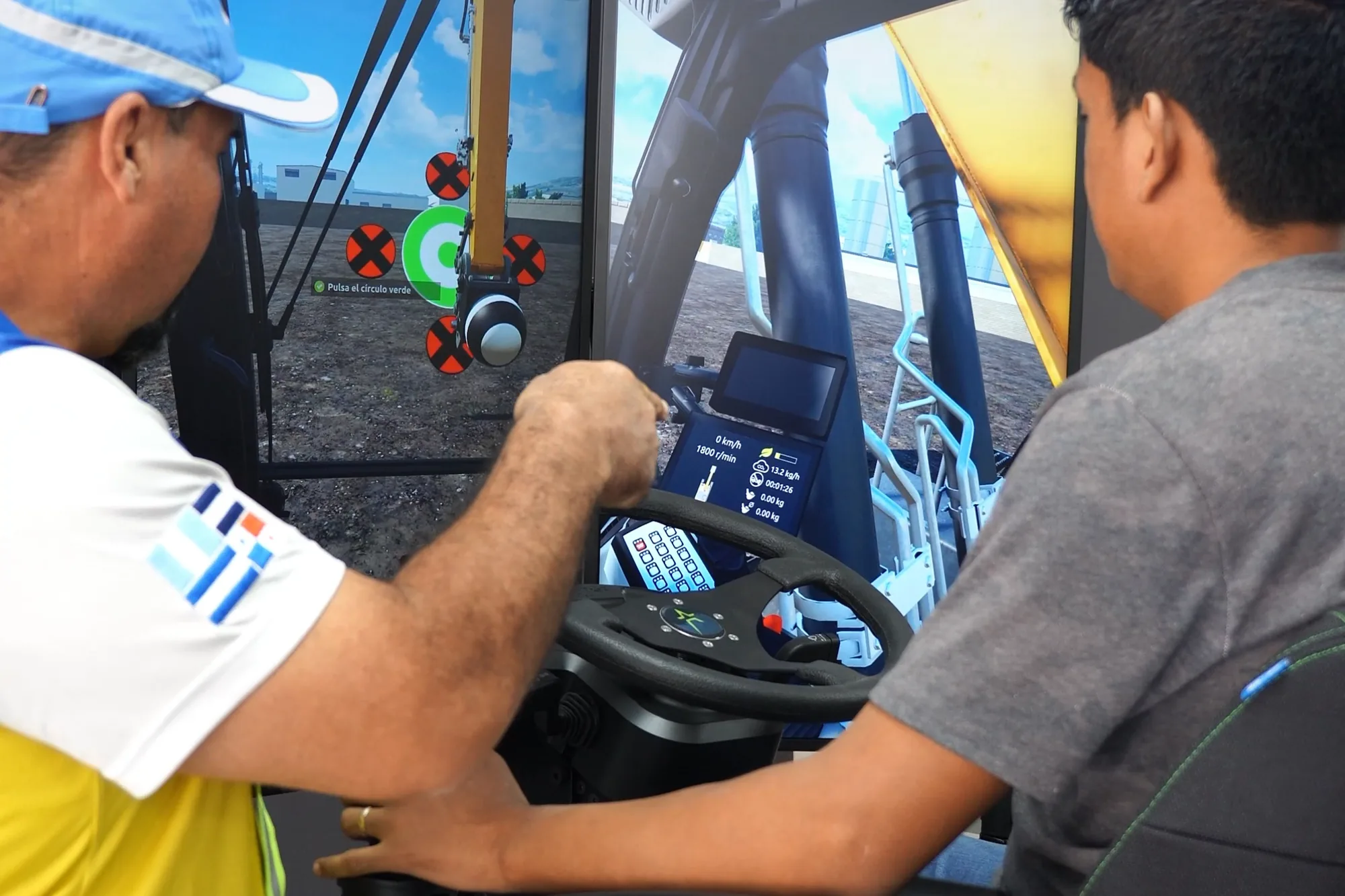
What the machine does and why, then controls and work cycles on a Tenstar Simulation simulator, where a mistake breaks nothing and hurts no one.
Supervised practice on a real machine
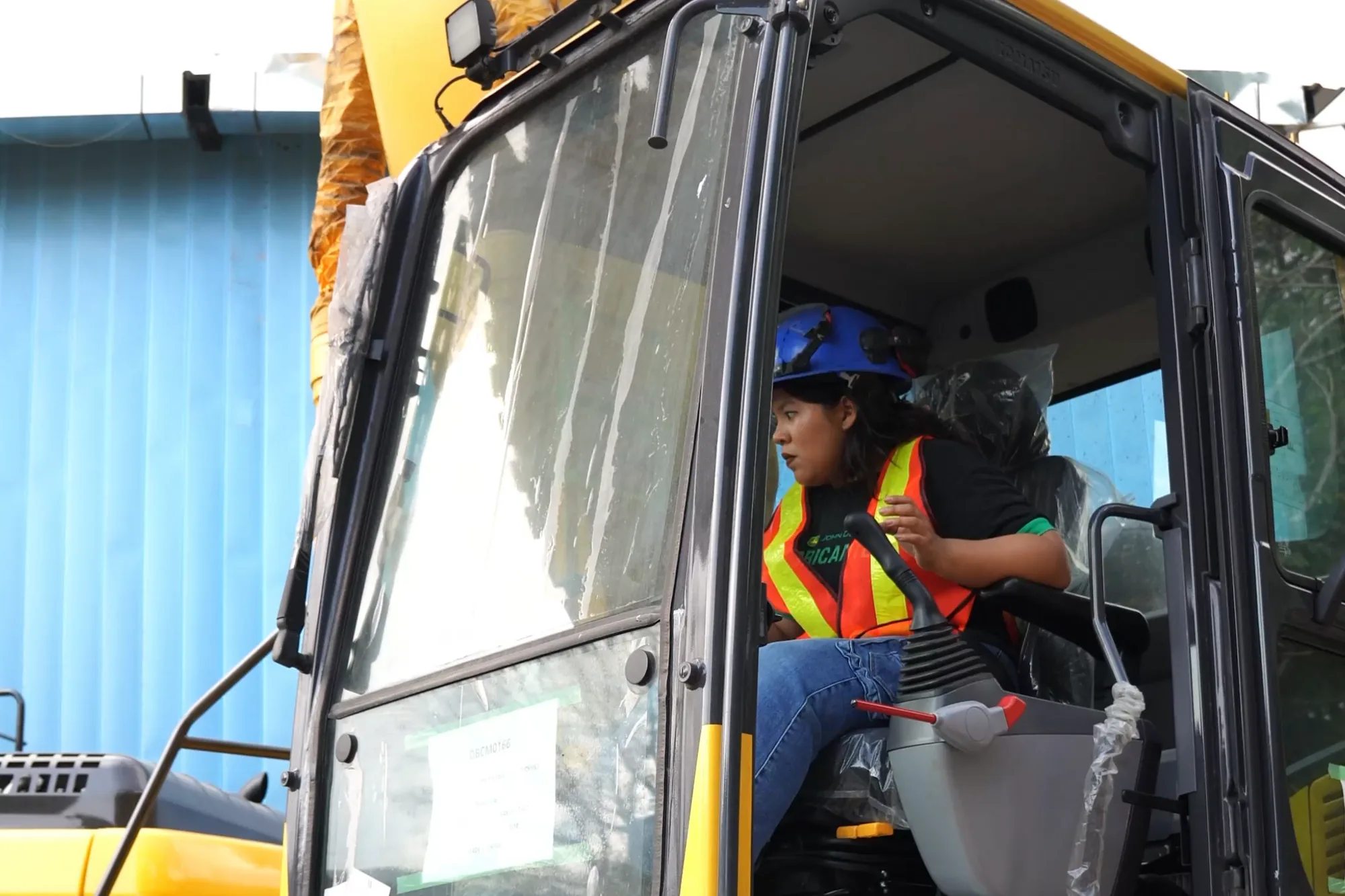
In the training yard, with the instructor next to you. This is where you learn what a screen cannot give you: real ground, the real weight of the machine and people around it.
Field assessment
An assessor scores you criterion by criterion while you do the task. Passing a test is not the same as being able to do the job.
Verifiable certificate
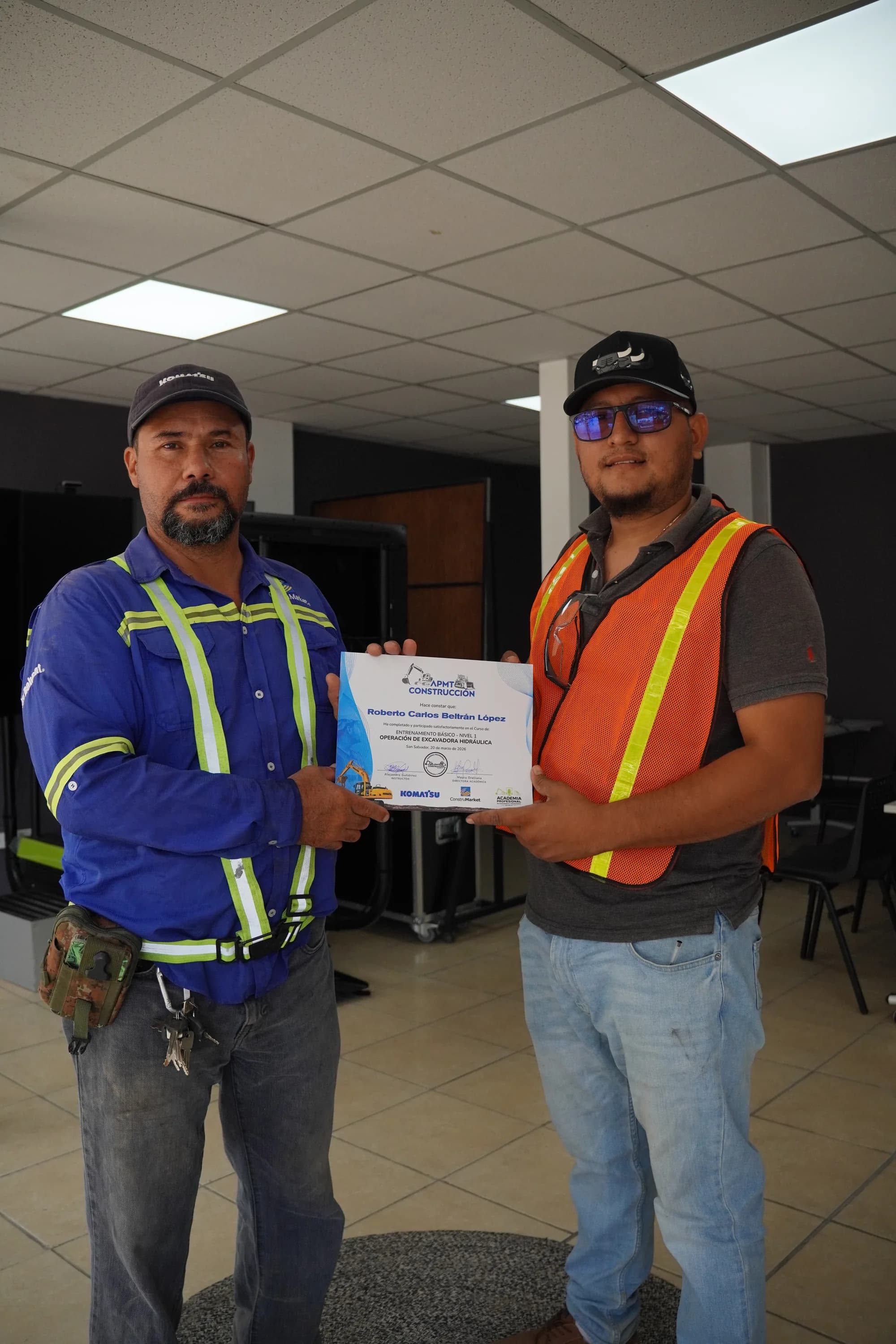
You receive the certificate that matches what you demonstrated, with a code and a QR. Most APMT operator programs close with the APMT competency certificate, which requires a formal practical assessment.
Four shots of the method at the Zaragoza campus: simulator, real excavator, skid steer loader and an instructor directing the maneuver. No audio.
What operator training covers
Learning outcomes of APMT operator programs, as published on each program page:
- Operate standard controls safely (excavator).
- Dig trenches, load trucks and do basic grading (excavator).
- Maneuver in tight spaces and recognize the risk of buried utilities (mini excavator).
- Work within the rated load and change attachments safely (skid steer loader).
- Apply the stability triangle and work around pedestrians and site traffic (forklift).
- Apply practices that reduce fuel use and machine wear.
What a job site needs to know about an operator
A contractor's question is concrete: who here today can get on that machine? That is why evidence weighs more than a diploma. APMT training is built around four things that can be checked:
- You operate safely around people: you know the blind spots and swing radius, and you work with the signal person.
- You inspect the machine before starting it and report what you find.
- You look after the equipment: fewer impacts, less idling, less wear.
- You can prove it: a certificate that states what it certifies and can be verified online in seconds.
What a certificate does not replace
An APMT certificate does not replace any license, permit or authorization required by law in your country. The regulatory or employment validity of a certification may vary by country, program and accrediting body.
Price, dates and entry requirements
APMT does not publish prices, dates, seats or entry requirements on the website: they are quoted per program, country and delivery mode, and the hours of each program are confirmed per intake. Request information from the page of the program you are interested in and the academy replies with a proposal.
Frequently asked questions
Do I need prior experience to start an operator course?
Entry requirements for each program are confirmed by the academy when you ask for information; they are not published on the website. What is defined is the order: nobody gets on the machine at step one. Safety and theory first, then the simulator, then supervised practice.
Where can I train as a heavy equipment operator in El Salvador?
At APMT's campus in Zaragoza, La Libertad, which has Tenstar Simulation simulators and practice on a real excavator, skid steer loader, telehandler and light equipment. APMT also operates in Nicaragua and runs in-company training at the client's job site.
Is the APMT operator certificate official?
Each certificate states exactly what it certifies (participation, pass or APMT competency) and is publicly verifiable by code and QR. Regulatory or employment validity may vary by country, program and accrediting body, and it does not replace any license required by law in your country.
How much does an operator course cost?
Prices are quoted per program, country and delivery mode. Request information from the program page and you will receive a proposal.
Sources
- APMT program page: Fundamentos de excavadora hidráulica
- APMT program page: Inducción general a obra
- APMT program page: Seguridad alrededor de maquinaria
- APMT program page: Fundamentos de minicargador
- APMT · Certifications (types, levels and statuses)
- APMT · Simulators and training centers
- APMT · Job-site stories (graduates with published certificates)
An APMT guide, written from the published program catalog and the sources cited.
The regulatory or employment validity of a certification may vary by country, program and accrediting body. Komatsu, Smart Construction and KOMTRAX are trademarks of their respective owners.